Strategic Notes
Mia Džepina
Published on: Sept 16th 2026
Luxembourg's economic model is highly dependent on the openness of its neighbours, specifically through the daily movement of its cross-border workers. However, political conditions sustaining this openness are becoming less certain. The rise of the radical right in France and Germany matters because it is already reshaping the incentives, language, and priorities of mainstream political actors, particularly on issues of migration, national sovereignty, and control of borders. This is a domestic resilience challenge for Luxembourg. This note argues that the main risk lies in the gradual deterioration of the practicalities of free movement through border controls, administrative friction, and increasingly contested distributive arrangements. Luxembourg should therefore move beyond a predominantly reactive model of bilateral accommodation and implement a more resilient strategy that frames cross-border integration as a jointly owned regional asset, strengthens mechanisms for shared investment and planning, and Europeanises disputes where possible through existing EU frameworks. Political developments, this strategic note argues, should be treated as part of Luxembourg's own domestic risk environment.
Recent developments in Luxembourg’s neighbourhood warrant attention. Marine Le Pen has declared her candidacy for France’s 2027 presidential election[1] and leads current voting-intention polls,[2] and Germany’s Alternative für Deutschland (AfD) is leading in several national polls after its resounding victory in Saxony-Anhalt.[3] Caught in the middle, Luxembourg may be heavily impacted by these changes. The electoral success of these radical right parties is not the only source of a worry to Luxembourg, but also the resulting changes in the incentives, language and priorities of mainstream political actors, particularly on issues of migration, national sovereignty, and control of borders.
This is not just a conditional risk that begins with French presidential elections in 2027 or with future German elections on the federal level. The shift is already taking place within mainstream political parties. Germany introduced controls at its border with Luxembourg under Olaf Scholz’s government in September 2024, and this has only intensified after Friedrich Merz took office in May 2025. In other words, the radical right parties matter, but primarily as accelerants of processes that are already well under way.
For Luxembourg, this change has direct impact on the economic model under which it operates. It is obviously impossible for this small state to control the political direction of its neighbours. It should stop assuming, however, that the European openness, on which its prosperity depends, is politically irreversible.
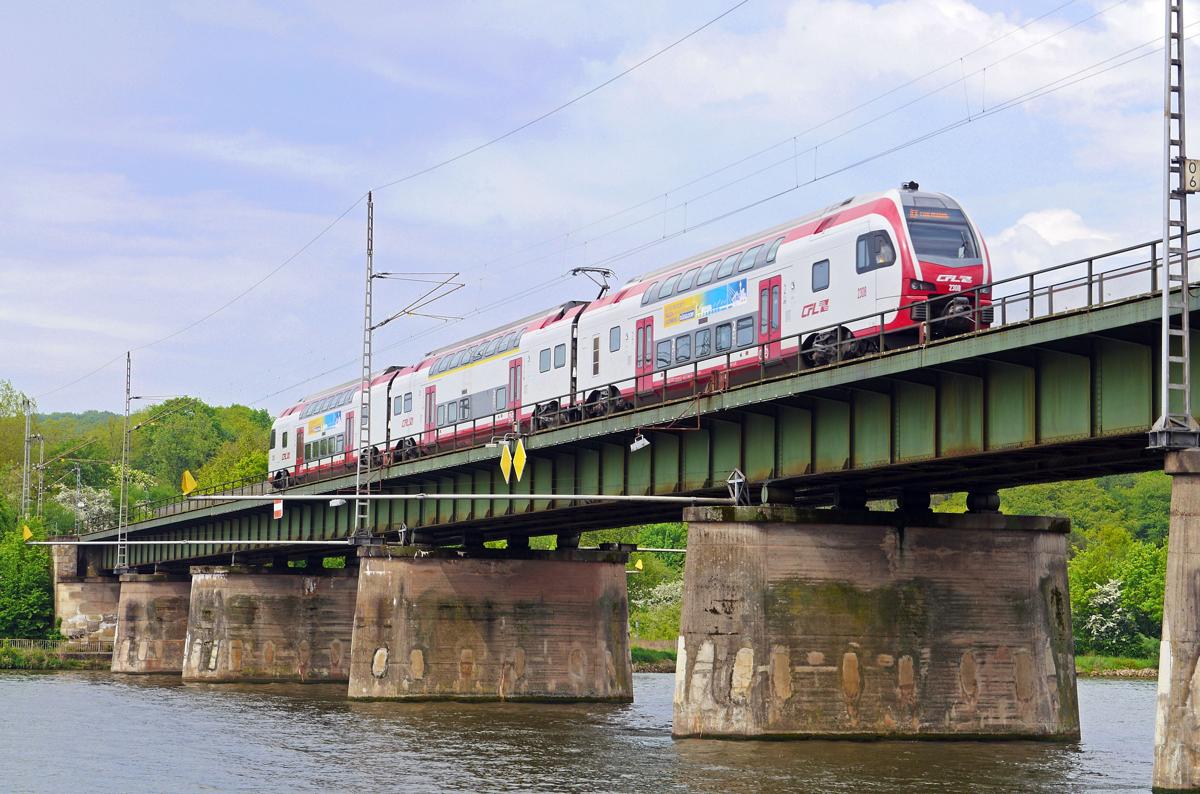
Luxembourg’s neighbours and, by extension, its borders, are a part of its economic operating system. In 2025, Luxembourg relied on 228 300 cross-border workers, making up nearly half of its workforce.[4] In 2024, 126 000 cross-border workers came from France alone, with an additional 53 000 coming from Germany and 52 000 from Belgium.[5] This means that every working day, Luxembourg’s operations (hospitals, financial institutions, construction sites, shops and public services), rely heavily on people crossing national borders quickly and predictably. This unusually deep integration has enabled Luxembourg to sustain an economy far larger than its own resident population could support. However, it has also left it vulnerable, as political decisions taken in the neighbouring capitals can affect Luxembourg’s domestic functionality.
Two increasingly visible political claims can help explain where the pressures on this model may emerge. The first claim is that of economic extraction. Luxembourg captures a disproportionate share of economic benefits generated by its cross-border workers, while the neighbouring territories retain parts of the social and infrastructural cost. France has already questioned whether it is adequately compensated for its contribution to Luxembourg’s economy.[6] Belgium provides the clearest institutional expression of this extraction argument. Luxembourg finances a compensation mechanism for Belgian municipalities that cannot levy their municipal surcharge on employment income earned and taxed in Luxembourg. In 2024, Walloon municipalities received approximately €49.6 million, and in 2025 more than €51.8 million.[7]
Luxembourg should stop assuming that the European openness, on which its prosperity depends, is politically irreversible.
France is especially important as it combines this distributive claim with a second claim, the one of border sovereignty. With the mounting pressures of the far right, specifically the RN’s success pushing other parties to adopt more restrictive positions on migration and border enforcement,[8] Luxembourg could find itself exposed to stronger national authority at borders. France matters here because it supplies over half of Luxembourg’s cross-border workforce. Germany also currently embodies the sovereignty problem. Border controls already in place can only be increased by the successes of the AfD. The more they gain electorally, the stronger the incentive for conservative and centrist parties to also appear more in control of borders and migration.
This asymmetry in the neighbourhood is also important. The two principal vulnerabilities have different addresses: the sovereignty claim is visible in Germany and France, while the extraction claim is most institutionalised in Belgium and increasingly articulated in France.
It is hard to expect that a future government of any of Luxembourg’s neighbours could lawfully abolish the EU free movement model. Formal rights will remain intact, but their practicalities may become slower, less predictable and more burdensome. Although legal mobility will remain, functionality may be damaged. Repeated identity checks, longer queues, selective crossing points and additional documentation can accumulate delays, lost working time, staffing uncertainty and congestion.
This is already happening. In its June 2026 opinion, the European Commission (EC) recorded complaints from citizens and businesses and found that controls had created difficulties for communities and cross-border workers at the German-Luxembourg border. Bilateral contacts led to practical improvements, including the replacement of fixed controls near Trier with mobile checks.[9] This example demonstrates that disruption can be managed, and that Luxembourg has so far had to respond after national measures elsewhere have already produced consequences.
Functional mobility should nevertheless serve as an example of the larger problem. Border checks are a manifestation of a wider return to territorial politics. The same shifts may affect fiscal arrangements, access to public services, cross-border infrastructure and the political willingness of neighbouring governments to maintain an economic model from which the benefits and costs are perceived to be unevenly distributed.
Luxembourg has thus far responded to its neighbours with a policy of accommodation. It has given financial compensations to Belgium and has even committed €230 million to jointly finance cross-border transport projects in France.[10] For a small state, with an economic model so deeply dependent on cooperation, this approach is understandable. However, accommodation creates a strategic problem. Luxembourg risks appearing to accept the underlying premise that its value comes from its neighbourhood and therefore it is required to compensate for their continued participation in the model. Put more sharply, Luxembourg risks treating cross-border integration as a favour it must pay for.
This matters as concessions may settle individual disputes, but can also serve as precedents to be invoked somewhere else. This has already been visible in French political debate, where the French National Assembly wanted to reform the way unemployment benefits were paid to cross-border workers.[11] This continued bilateral accommodation could therefore invite rather than contain additional distributive claims. Cross-border unemployment reform has already been accepted in the European Parliament and it has given its final approval to the revision of Regulation 883/2004 which will make countries of employment responsible for paying unemployment benefits in a large number of cases.[12]
Therefore, a more sustainable response from Luxembourg could be to move from a model of compensation to one of co-ownership, where cross-border regions are treated as spaces for joint investment, shared planning and common institutional responsibility. Alzette-Belval provides a useful example for this, even if barely funded compared with the investments in compensation. The European Grouping of Territorial Cooperation has brought together Luxembourgish and French national and local authorities around a cross-border territory, where these two countries cooperate on mobility, territorial development and education.[13] This approach could be expanded to the entire neighbourhood of Luxembourg, where resources are invested rather than simply transferred.
Cross-border integration is being treated as a favour Luxembourg must pay for.
Luxembourg should follow a similar logic in its European strategy too. The revised Schengen Borders Code already requires governments that wish to reinstate border control to assess their effects on the functioning of cross-border regions.[14] Luxembourg has already tested this route when it complained to the Commission about German border checks in September 2025.[15] Even if this first application produced recommendations rather than compliance, these provisions can be used actively to build coalitions with other highly integrated border regions and small states. By Europeanising the issue, the danger that border friction becomes an asymmetrical bilateral negotiation could be reduced.
It is important for this small state to treat political changes in its neighbourhood as part of its own domestic risk environment. This does not turn every election into a crisis, but it does require Luxembourg to recognise that its stability and prosperity depend on the political conditions beyond its borders. This dependence, therefore, needs to be incorporated into diplomatic engagement, European coalition-building and resilience planning. Luxembourg cannot choose the political direction of its neighbours, but it can argue for its own model as a jointly-owned asset that the whole region benefits from.
Photo credit: Pixabay.com
[1]Jon Henley, “Marine Le Pen will run for elections in 2027. Will she have to wear an electronic tag?,” The Guardian, July 8, 2026.
[2]Global Banking and Finance Review, “Opinion polls see France’s Le Pen winning 2027 elections despite guilty verdict,” Global Banking and Finance Review, July 9, 2026.
[3]Sabine Kinkartz, “Germany’s far-right AfD benefits from discontent with Merz,” Deutsche Welle, August 5, 2026.
[4]Diana Hoffman, “Luxembourg remains a draw for foreign workers, but most do not stay long,” RTL Today, April 3, 2026.
[5]STATEC, Regards 01/25 – Panorama of the Luxembourg labour market on May 1st, April 1, 2025.
[6]Thomas Toussaint, “Remote work discussions have stalled between Luxembourg and France,” RTL Today, March 5, 2026.
[7]Yves Greis, “Luxembourg pays 52 million to Walloon municipalities for 2025,”Les Frontaliers, July 17, 2025.
[8] Vision of Humanity, “Migration, Politics, Pressure and the Rise of Far-Right,” Vision of Humanity, January 7, 2026.
[9]Newsdesk, “Brussels Presses Berlin to Restore Schengen’s Open Borders,” The European Times, June 6, 2026.
[10]OD, “Luxembourg, Grand Est Mobilise for Cross-Border Mobility,” Chronicle.lu, June 30, 2023.
[11]Thomas Toussaint, “French MP Isabelle Rauch proposes linking unemployment benefits to country of employment,” RTL Today, October 13, 2025.
[12]Marc Fassone, “EU Parliament approves cross-border unemployment reform,” Paperjam, July 7, 2026.
[13]Government of Luxembourg, “Installation of the Alzette-Belval EGTC,” March 9, 2013.
[14]European Parliament and the Council of the European Union, Regulation (EU) 2024/1717amending Regulation (EU) 2016/399 on a Union Code on the rules governing the movement of persons across borders, June 13, 2024.
[15]Florian Javel, “EU Commission proposes end to border controls in Germany,” Luxembourg Times, June 3, 2026.