Strategic Notes
Anđela Mićanović
Published on: May 21st 2026
This Strategic Note examines Montenegro’s path to EU membership as a test of whether enlargement can again function as a credible strategic and transformative project for Europe. Anđela Mićanović argues that the long stagnation of enlargement in the Western Balkans was driven less by regional shortcomings than by the European Union’s own overlapping crises and declining political will. Russia’s invasion of Ukraine fundamentally altered this calculus, returning enlargement to the center of European geopolitics and positioning Montenegro as the Union’s most operationally feasible accession candidate. Yet the note warns that enlargement driven primarily by strategic urgency risks reproducing the same managerial logic that weakened democratic transformation across the region over the past decade. Montenegro’s accession by 2028 would strengthen the EU’s geopolitical credibility, but only if the process remains anchored in substantive reform, limits bilateral veto politics, and restores confidence that enlargement still rewards democratic transformation rather than mere strategic utility.
Download PDFFor more than a decade, EU enlargement in the Western Balkans existed more on paper than in political reality. That phase has ended. As Montenegro marks twenty years since the restoration of independence following the breakup of Yugoslavia, it is closing negotiation chapters at a pace unmatched by any candidate in years, with a 2028 accession horizon increasingly treated in EU institutions as plausible rather than aspirational. Russia's invasion of Ukraine forced the European Union to treat enlargement again as a strategic question, and Montenegro emerged as its most viable opportunity to restore the credibility of a process weakened by more than a decade of political hesitation, growing mistrust, and progressive disengagement. The speed of the current process, however, raises a broader question: is the Union returning to enlargement as a transformative political project, or merely using it as an instrument of strategic crisis management? Montenegro should join the European Union by 2028, yet, what the next two years require is not additional conditionality, but a more politically coherent enlargement process – one capable of sustaining reform pressure in Montenegro, while limiting the ability of individual member states to instrumentalize accession for domestic political purposes.
The political horizon of EU integration was extended to the Western Balkans at the Thessaloniki Summit in 2003.[1] More than two decades later, only Croatia has crossed the threshold. The standard explanation for this near-stasis rests on three concerns, each present in EU policy debates throughout this period. The first is the disappointing record of the 2004 and 2007 accession waves, of which Hungary remains the most consequential case: not merely an example of post-accession democratic erosion, but a full-scale institutional backsliding that the Union's existing instruments have proved largely unable to contain.[2] The second concerns governability. With twenty-seven members, the EU is vulnerable to weaponized veto politics, visible in the prolonged Greek, French, and Bulgarian blockages of North Macedonia, and repeated disputes over sanctions and rule-of-law conditionality. Adding members without deeper political integration risks a Union at once larger and less governable, a concern formalized in the 2023 Franco-German expert report on EU reform readiness.[3] The third is domestic. Public support for enlargement has been low in several key member states for nearly two decades, and enlargement decisions require unanimous ratification. Spring 2026 Eurobarometer data shows majorities in France, Germany, and Austria opposing enlargement.[4]
Reform commitments continued to be rewarded with engagement rather than concrete progress; accession became something the Union maintained rather than concluded.
Yet none of these concerns is specific to the Western Balkans, and none alone explains more than a decade of paralysis. They were all present when Croatia concluded its accession negotiations in 2011, and when Montenegro opened its own in 2012. What slowed the region's path was not the intensification of these concerns but the progressive consumption of the EU's political bandwidth by its own overlapping crises: the eurozone crisis, Brexit, the migration surge, the rise of illiberal governments inside the Union, the COVID-19 pandemic, and finally the war in Ukraine. The result was not a deliberate strategic reorientation but a gradual erosion. Reform commitments continued to be rewarded with engagement rather than concrete progress; accession became something the Union maintained rather than concluded.[5] This was a default, not a strategy. The 2020 revised methodology addressed procedure but it could not address the absence of political will.[6]
The consequence was an enlargement process that continued procedurally while losing its capacity to drive substantive change. Regional elites adapted. Formal alignment advanced – chapters opened, benchmarks met on paper, EU language institutionalized – while patronage networks deepened, judicial independence weakened, and media environments deteriorated.[7] The arrangement suited both sides. Local elites extracted legitimacy and funding from Brussels, while Brussels extracted stability from local elites. The result was equilibrium without transformation. North Macedonia revealed yet another limit of the same model. After delivering the politically costly 2018 Prespa Agreement, Skopje was successively blocked by Greece, France, and Bulgaria, confirming that even major concessions and democratic reforms no longer guaranteed forward movement.[8] As European leverage weakened, external actors – Russia most visibly, but also China, Turkey, and the United Arab Emirates – entered the spaces that EU ambivalence had opened, giving regional elites credible alternative partners and raising the cost of any decisive European pressure.[9] What emerged was a regional order formally European in trajectory but increasingly managerial in practice: stable enough to manage, insufficiently transformative to complete. The architecture was politically convenient on all sides, and the costs accumulated quietly until an external shock made them legible.
The 2022 Russian invasion of Ukraine changed the calculus abruptly. What had been managed for a decade as a regional question of democratic transition became a question of strategic positioning on Europe's eastern and southeastern flank. Ukraine and Moldova received candidate status within months,[10] and the Western Balkans returned to the center of enlargement debates. The logic of this return was not a recovery of the transformative ambition of the early 2000s. Enlargement was reframed less as a vehicle of democratization and more as an instrument of geopolitical containment. Montenegro emerged as the central test case: a candidate of 630,000 inhabitants, already deep into negotiations and carrying limited geopolitical and institutional risk, became the most operationally manageable enlargement case on the table. It is the only case Brussels can finish in the foreseeable future. The acceleration over the past four years, with 14 of 33 chapters closed and a 2028 horizon publicly entertained, is the first concrete signal in over a decade that the Union retains the capacity to conclude an enlargement process ratherthan merely to manage one.[11]
If accession becomes possible because the geopolitical environment requires a visible result, then the message is not that reform is rewarded but that strategic utility substitutes for transformation.
What is emerging is an operational enlargement: a process whose decisive criterion is the managerial and geopolitical feasibility of accession, not the consolidation of democratic reform. Montenegro is the natural candidate for such a strategy. It is small, politically low-risk, symbolically useful. The Union needs to demonstrate that it remains a relevant geopolitical actor, and Montenegro provides the means. Yet that approach exposes the central contradiction: the very factors that make Montenegro suitable for a near-term accession breakthrough risk reproducing, rather than correcting, the logic that generated more than a decade of stagnation. Montenegro has achieved measurable progress, particularly in the rule-of-law chapters, though that progress remains uneven and incomplete.[12] Therefore, the issue is structural: If accession becomes possible because the geopolitical environment requires a visible result, then the message to Albania, Serbia, Ukraine, and Moldova is not that reform is rewarded but that strategic utility substitutes for transformation.[13] The opposite case carries the same weight. If Montenegro advances and the Union does not deliver, the credibility of the process may be lost permanently.
Restoring confidence in enlargement does not, however, require slowing the process. Most of the necessary instruments already exist; the question is how to use the two years before the 2028 horizon. Four priorities matter. First, the Commission must use the closing of Chapters 23 and 24 not as a procedural threshold but as the substantive opportunity it represents: Montenegro is small enough that meaningful and verifiable reform is feasible, and a credible record here would make accession defensible on its merits rather than only on geopolitical grounds. Second, accession progress must remain anchored in Commission-based assessments rather than becoming vulnerable to bilateral veto politics, as demonstrated by the North Macedonia case. This will require the Commission to anticipate potential political blockages early and to build support for enlargement more actively within member-state capitals where resistance remains strongest. Third, the timeline being established for Montenegro should be accompanied by clearer signals about Albania, North Macedonia, and Serbia, in order to secure their constructive engagement throughout the process. A horizon for one candidate and ambiguity for the rest deepens regional cynicism. Fourth, the Union should operationalize the instruments already available – from the Reform and Growth Facility[14] to gradual integration mechanisms and emerging post-accession safeguards – while allowing deeper institutional reforms to develop in parallel rather than turning them into a precondition that indefinitely postpones enlargement. None of this requires reopening the treaties or postponing Montenegro’s accession. It requires an accession process that treats the remaining period before membership as politically consequential: in Montenegro’s interest to enter the Union with more durable reforms in place, and in the Union’s interest to approach the next phase of enlargement with greater credibility.
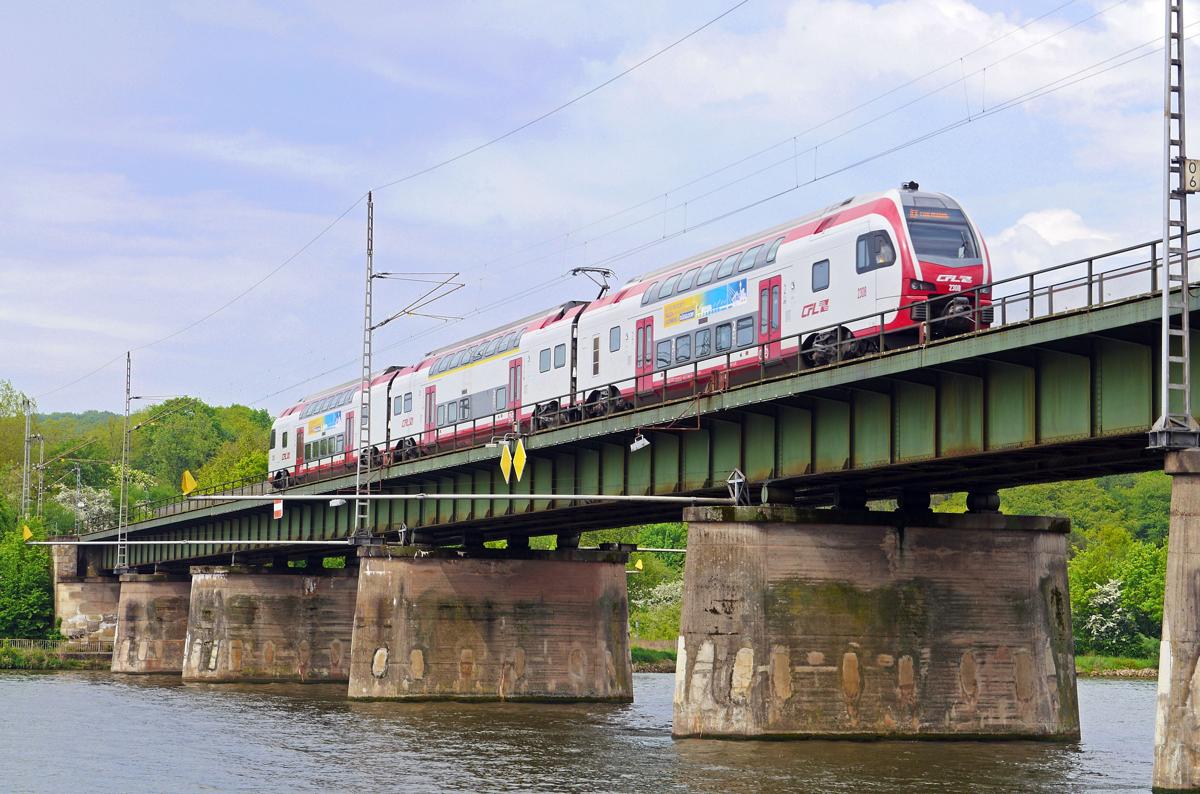
Montenegro has thus become more than the most advanced candidate for EU membership; it has become a test of whether the European Union still possesses the political coherence necessary to carry enlargement forward as a credible strategic project rather than as temporary crisis management. If the Union admits Montenegro while restoring the credibility of the broader process, it will demonstrate that enlargement remains a serious strategic project even under geopolitical pressure. If accession proceeds on operational momentum alone, the result may institutionalize the very pattern this moment had the chance to break. When Luxembourg held the Presidency in 2005, it opened accession negotiations with Croatia under the strategic logic of the Thessaloniki commitment of 2003: enlargement to the Western Balkans was a European interest, not a regional favor. When Luxembourg returns to the Presidency in 2029, Montenegro should already be inside the Union, and the same strategic logic should govern what comes next.
Photo credit: Pixabay
[1] European Council, Conclusions of the Thessaloniki European Council, 19–20 June 2003: EU-Western Balkans Summit Declaration (Brussels, 2003).
[2] Ulrich Sedelmeier, “Anchoring Democracy from Above? The European Union and Democratic Backsliding in Hungary and Romania after Accession,” Journal of Common Market Studies 52, no. 1 (2014): 105–121; R. Daniel Kelemen, “The European Union’s Authoritarian Equilibrium,” Journal of European Public Policy 27, no. 3 (2020): 481–499; R. Daniel Kelemen, “Europe’s Other Democratic Deficit: National Authoritarianism in Europe’s Democratic Union,” Government and Opposition 52, no. 2 (2017): 211–238.
[3]Franco-German Working Group of Twelve, Sailing on High Seas: Reforming and Enlarging the EU for the 21st Century, report submitted to the French and German Ministers for Europe (Paris-Berlin, 18 September 2023).
[4] European Commission, Standard Eurobarometer 105 – Spring 2026, fieldwork conducted 12 March–5 April 2026 (Brussels: Directorate-General for Communication, 2026).
[5] Gergana Noutcheva, European Foreign Policy and the Challenges of Balkan Accession: Conditionality, Legitimacy and Compliance (London: Routledge, 2012).
[6] European Commission, Enhancing the Accession Process: A Credible EU Perspective for the Western Balkans, Communication from the Commission to the European Parliament, the Council, the European Economic and Social Committee and the Committee of the Regions, COM(2020) 57 final (Brussels, 5 February 2020).
[7]Florian Bieber, “Patterns of Competitive Authoritarianism in the Western Balkans,” East European Politics 34, no. 3 (2018): 337–354; Freedom House, Nations in Transit 2025: Democracy in the Balkans (Washington, DC: Freedom House, 2025).
[8]Florian Bieber, “Patterns of Competitive Authoritarianism in the Western Balkans,” East European Politics 34, no. 3 (2018): 337–354; Florian Bieber and Marko Kmezić, The Crisis of Democracy in the Western Balkans: An Anatomy of Stabilitocracy and the Limits of EU Democracy Promotion (BiEPAG, 2017).
[9] Florian Bieber and Nikola Tzifakis, eds., The Western Balkans in the World: Linkages and Relations with Non-Western Countries (London: Routledge, 2020); Dimitar Bechev, Rival Power: Russia’s Influence in Southeast Europe (New Haven: Yale University Press, 2017).
[10] European Council, Conclusions of the European Council Meeting (23–24 June 2022), EUCO 24/22 (Brussels, 2022).
[11] European Commission, 2025 Enlargement Package: Communication on EU Enlargement Policy, COM(2025) 690 final (Brussels, 4 November 2025).
[12] European Commission, Montenegro 2025 Report, SWD(2025) 691 (Brussels, 4 November 2025).
[13] Ulrich Sedelmeier, “Anchoring Democracy from Above? The European Union and Democratic Backsliding in Hungary and Romania after Accession,” Journal of Common Market Studies 52, no. 1 (2014): 105–121.
[14] Regulation (EU) 2024/1449 of the European Parliament and of the Council of 14 May 2024 establishing the Reform and Growth Facility for the Western Balkans, Official Journal of the European Union L 2024/1449.